~1,000 L
held by one reused bladder — up to 8× a rain barrel
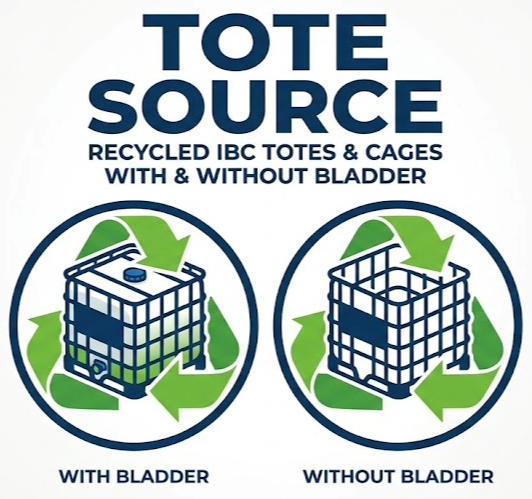
Every Intermediate Bulk Container (IBC) is a HDPE bladder inside a galvanised steel cage. Sold new it costs hundreds; scrapped it is worth a few dollars. In between sits its best life — reused. We run a small regenerative farm in East Gwillimbury, Ontario. We love to recycle and have been fascinated by what can be done with an IBC and a bit of ingenuity, so we developed this catalogue of one hundred uses for IBCs.
Oh, and we sell them as well — we can supply them modified for all the different uses we have listed, and we deliver too.
An IBC is engineered to move 1,000 litres of liquid safely, then it is often discarded after a single trip. Recycling recovers only the raw plastic value — a few dollars for a whole bladder as baled scrap, before the cost of cutting, cleaning, and hauling.
While buying a new purpose-built tank, planter, cage, or trough means paying to mold new plastic or fabricate new steel.
Whereas reuse captures the value in between. It keeps a durable, standardised, forklift-portable container in service for years, avoids the embodied carbon of a new product, and usually costs a fraction of the alternative it replaces. As the pages below show, we have found a hundred different ways to reuse IBCs — and save money at the same time.
Food-grade bladders that hold water — the highest-value, widest-demand reuse.
Homestead and small-farm reuse where capacity and durability matter.
Wellness and outdoor reuse of large, watertight bladders.
Inert containment where a rugged vessel earns its keep.
The galvanised cage as a stackable, machine-movable steel crate.
The cage as a fabrication frame for garden and yard structures.
Cut bladders as deep, rot-proof growing and landscape vessels.
Off-grid water, sanitation, and emergency reuse.
B2B and craft reuse for commercial operators.
Long-tail cage reuse with specific buyer niches.
Bladder and cage combined into complete, higher-value units.